
Abstract
This professional guide provides comprehensive slip ring selection guidelines for the packaging machinery industry, detailing applicable machine types, core functions, key parameter specifications, and practical case studies. It systematically addresses the specific requirements of rotating conductive rings in equipment such as filling machines and labeling machines, covering critical selection criteria including dimensional specifications, rotational speed, service life, and structural configurations. The guide explicitly outlines technical specifications for signal transmission, current compatibility, pneumatic-liquid integration, and protection ratings in filling machine slip rings and labeling machine conductive slip rings. These insights empower enterprises to make precise equipment selections, mitigate compatibility risks, and enhance operational stability and efficiency of packaging systems, serving as a core reference for production and equipment upgrades.
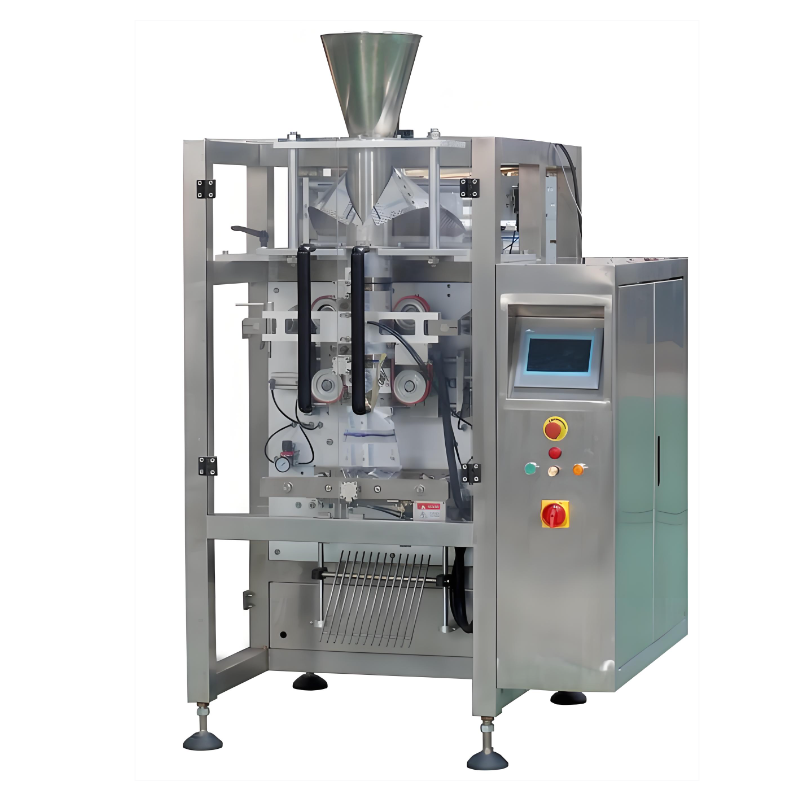
Ⅰ. Application scenarios of slip rings in packaging machines: Which equipment cannot do without rotating conductive rings?
As the core connecting component between rotating and stationary parts, the slip ring in packaging machines is widely used in equipment requiring 360° rotation, ensuring continuous operation. Specifically, filling machines (liquid/filling powder machines) must be equipped with slip rings to connect rotating filling heads with fixed control systems. Labeling machines (cylindrical/bi-lateral labeling machines) rely on conductive slip rings to transmit signals and power to rotating labeling mechanisms. Additionally, rotating actuators in winding machines, sealing machines, multi-station packaging machines, and vacuum packaging machines all require slip rings to enable non-winding conductive and signal interaction.
II. Core Function of the Sliding Ring in Packaging Machines: The Value of Rotating Conductive “Bridge”
The slip ring in packaging machinery, also known as a rotating conductive ring, primarily addresses the continuous transmission of electrical signals, pneumatic and hydraulic media between rotating and stationary components, overcoming the limitations of wiring entanglement and wear during rotation. In filling machines, the slip ring synchronizes control signals with power currents to ensure precise filling volume control and stable operation of rotating filling heads. For labeling machines, the conductive slip ring transmits calibration signals for labeling accuracy and motor drive currents, guaranteeing precise labeling positions and synchronized speeds. Furthermore, slip rings integrated with pneumatic-hydraulic channels enable unified transmission of pneumatic/hydraulic media and electrical signals, simplifying equipment structure and enhancing operational efficiency.
III. Core Parameters of Sliding Ring Selection for Packaging Machines: Key Dimensions for Precise Matching
The selection of slip rings for packaging machines should be based on equipment operating conditions and requirements, with emphasis on key parameters such as size, rotational speed, service life, and structural design. The following provides a detailed breakdown:
|
Selection parameters |
Compatibility Requirements and Instructions |
Typical applications (filler/sticker machine) |
| dimensions | The matching packaging machine’s rotating shaft diameter and installation space are required. Commonly used through-hole diameters range from 8-50mm with outer diameters of 20-80mm. Compact sliding rings are suitable for small label applicators, while large-diameter models are necessary for large filling machines. | Conductive slip rings for labeling machines typically feature 8-15mm through-hole sizes, while those for fully automatic filling machines generally use 20-30mm through-hole dimensions. |
| range of speeds | The standard rotational speed of the packaging machine’s slip ring is 0-300 rpm, while conventional labeling and filling machines are compatible with low-speed models (0-100 rpm). High-speed packaging equipment requires high-precision high-speed slip rings (0-500 rpm) to ensure stable transmission. | The conductive slip ring in high-speed labeling machines must withstand 150-300 rpm, while the slip ring for semi-automatic filling machines can operate at 0-80 rpm. |
| life length | To meet the continuous operation requirements of packaging machines, the slip ring lifespan must be ≥5 million revolutions, with high-quality precious metal contact slip rings capable of exceeding 10 million revolutions. For harsh working conditions, wear-resistant and corrosion-resistant materials should be selected to enhance durability. | Industrial-grade filling machines require slip rings with a service life exceeding 8 million revolutions, while commercial labeling machines only need conductive slip rings rated at ≥5 million revolutions. |
| Structure form (through-hole/solid) | The through-hole type slip ring of the packaging machine facilitates shaft installation and is compatible with most packaging equipment equipped with rotating shafts, making it widely applicable. The solid-type slip ring, being more compact in size, is suitable for small rotating components without shaft insertion requirements, such as micro labeling machines. | For filling machines, the preferred type of slip ring is the through-hole type, which facilitates the integration of gas-liquid channels. For small manual labeling machines, solid-type conductive slip rings can be selected. |
| signal transmission type | Supports analog signals (4-20mA), digital signals (RS485, CAN bus), Ethernet signals, video signals, etc. The packaging machine typically uses control signals and position detection signals, while some equipment requires sensor signal transmission. | The slip ring of the filling machine needs to transmit liquid level detection signals and filling control signals, while the conductive slip ring of the labeling machine needs to transmit photoelectric positioning signals and motor drive signals. |
| common current | The slip ring current specifications for packaging machines are categorized into low-current (0.5-5A) and high-current (10-50A) types. Labeling machines and small filling machines are suitable for low-current models, while large filling machines require high-current slip rings for heating and drive components, which can be designed with multi-circuit current combinations. | The conductive slip ring of labeling machine typically operates at 2-5A current, while the main circuit of fully automatic filling machine’s slip ring requires 10-20A current, and the control circuit needs 1-3A current. |
| gas-liquid combination capability | Supports integrated pneumatic-hydraulic-electric transmission, enabling consolidation of pneumatic and hydraulic conduits. Compatible with packaging equipment requiring pneumatic/hydraulic drive (e.g., pneumatic fillers, hydraulic sealers), simplifying pipeline layout. | The slip ring of the pneumatic filling machine features a combinable pneumatic channel (0.3-0.8MPa), enabling synchronized pressure control and power transmission. |
| levels of protection | For standard packaging applications, the IP54 protection rating is selected, providing dust and splash resistance. In humid or dusty environments, the rating should be upgraded to IP65. For corrosion-resistant applications, custom protective structures can be customized. | Food filling machine slip rings require IP54 or higher protection (oil and moisture resistant), while outdoor labeling equipment needs IP65 protection. |
IV. Cooperation Case: High-quality Packaging Machine Slip Ring Service for Well-known Manufacturers
With years of expertise in slip ring technology for packaging machinery, we have established long-term partnerships with leading domestic and international manufacturers across the entire packaging equipment spectrum, including filling machines, labeling machines, winding machines, preform bagging machines, and secondary packaging systems. Our collaborations feature industry leaders such as Guangzhou Dayilong Packaging Machinery Co., Ltd. (a specialized slip ring supplier for filling machines) and Shanghai Songchuan Yuanyi Machinery Equipment Co., Ltd. (a core partner for conductive slip rings in labeling machines), alongside global brands like South Korea’s Honor Pack (a slip ring partner for preform bagging machines), Italy’s IMA Group (a comprehensive slip ring solution provider for pharmaceutical and food packaging), Marchesini Group (a conductive slip ring partner for pharmaceutical aseptic packaging), SMI Group (a slip ring supplier for blow molding and secondary packaging), and Cama Group (a custom slip ring provider for robotic packaging lines). We also serve industry giants including Germany’s Krauss Group and Italy’s Sacchi Group, delivering customized slip ring solutions and selection expertise for various packaging equipment. Our products are globally recognized for their stable transmission performance and exceptional service life.
V. Selection Summary: Efficient Matching of Packaging Machine Operation Requirements
The selection of slip rings for packaging machines should prioritize operational conditions, specifying application types (e.g., filling machines or labeling machines), structural configurations (through-hole or solid), critical parameters (size, rotational speed, current), and functional requirements (signal transmission, pneumatic-liquid integration, protection rating). Optimize the selection by referencing practical cases from partner manufacturers. This guide enables rapid identification of suitable rotating conductive ring models, preventing equipment failures caused by improper selection and enhancing the continuous operation capability and production efficiency of packaging machines.
Post time: Jan-23-2026